Saturday, 29 October 2011

Kumasi and the Core of the Ashanti Culture

The sixth region I have visited is nothing else, but the Ashanti Region, which is the center where most of Ghana`s traditions originated from. The story of this area looks somehow like this:

Once upon a time there was a powerful kingdom, called Asante (or Ashanti Kingdom). It was founded by King Osei Tutu in the eighteenth century. His powerful priest, Okomfo Anokye based the unity of the kingdom by a Golden Stool that mysteriously descended from heaven to unify the Asanti states. Besides the Golden Stool, there were two other symbols that provided unity: a sword that was placed into the ground and could never be removed and also a bag that could never be opened, otherwise the unity of the people would fall apart. The kingdom was ruled by the king and the queenmother – the king always sat on a golden stool (but not real one of course!), while the queenmother was seated on a wooden stool. The two of them together ruled and took care of the people of the kingdom, that in the in the eighteenth century was even larger than the current Ghana. Whenever a king died, some of his people volunteered to be killed so that the king could be accompanied by them to death. Also, his stool was painted black and named after him (if he was a good king – if he wasn`t, they didn`t name any stool after him). The next king was always appointed by the queenmother from the male side of the family. After this point the new king didn`t use his former name any more, instead, with his eyes closed he touched the black stool of the king who passed away, and this way, he got his name as well.
The Ashantis were peaceful people, who liked celebrating various events. For example for them one month didn`t consist of 30 or 31 days, but 42 – and in every 42 days they celebrated the days passed and gave thanks to the gods for what they have received from them in the past month.
Although they were very peaceful, at the same time they were also ready to defend themselves if needed – either by power or tricks. In the nineteenth century when the British wanted to colonize the Ashanti Kingdom, they heard about the Golden Stool that was said to hold the strength of Asante. They demanded this stool from the Ashantis, but at last they got a fake stool – still, it took them decades to find out that they were tricked. Besides this, the people of Asante did go to war, too: these times they were wearing thick clothes on which various bones and stones were hanged that all held magical power to protect the soldiers. The last uprising against the British was in 1901, led by a brave queenmother, Yaa Asantewaa, who was already 65 years old when she led her people against the British!!! Still, after she was captured and taken to the Seychelles, where she died at the age of 85, the Ashanti Kingdom was colonized by the British and only gained independence again in 1957 as a part of the current Ghana. 

Based on this strong culture, today you can find a busy metropolitan city, Kumasi (it has about 3.5 million inhabitants!!) in the middle of the former Asante. The streets are full of people rushing from one place to another, selling and buying all kinds of goods or apparently trying to get a trotro to get to work or get home from there. One of Ghana`t largest markets can be found in Kumasi, too, which is always crowded – ot would be pretty hard to go against the crowd there. Getting a trotro is not easy either, usually you have two choice: to wait in a queue for a long-long time or to travel in a big circle all around the city to finally get home. Altogether in Kumasi I felt like that it was a large, moving and living city where everybody is busy doing whatever he has to do to make a living. 


But at the same time under the layer of the metropolitan city, the Ashanti traditions are still alive, too: besides the government, the area is still ruled by the king and the queenmother as well and they still celebrate various festivals, when the king and the queenmother come out, too, they are carried on richly decorated seats and dance to the traditional beats of the Ashanti drums.
Besides, if you only have a few days to discover the culture of the Ashanti people – like we had now - , you can gain an insight by visiting Manhyia Palace, which was the former home of the kings, and also the Cultural Center where besides the museum (with a very friendly lady to show us around) there are also various art crafts for sale.
Well, I`m really happy that I got to experience this region as well – I guess without seeing Kumasi, I couldn`t have said that I really understood what Ghana was about.

Thursday, 27 October 2011

Kundum Festival (Western Region of Ghana)


This weekend I added two more regions of Ghana to the four that I have already seen (Greater Accra, Eastern, Volta and Central Regions), meaning that now I have been to six regions out of all the ten!!!
Now I`m going to write about my experience in the Western Region, where last week the people celebrated the famous Kundum Festival. This traditional festival is celebrated by the chiefs and the people of the region: starting in Takorade, which is the capital of the region, and then followed by town to town – every week it`s celebrated in different towns and villages.
The core part of the festival is the special Kundum dance, when people dance around and around to the beats of the drums played in the middle of the circle. Earlier it used to be also a time to show off with beautiful dresses, although today most of the people don`t wear their traditional dresses any more for the festival.
Well, we spent two days here, in the Western Region, during which I could get a taste of the festival: I got to experience the drumming and dancing both in the evening and early in the morning. I didn`t see too many people in traditional dresses, instead some of them were wearing crazier and crazier outfits: some people had white paintings on their faces, while others were wearing strange helmets.  Some of them where dancing around with children sitting on their children, others had whistles to provide some additional beat to the drums. Although first I felt more like an outsider trying to take pictures of this extraordinary event, soon I found myself between some of the people of the village, moving around the circle too and trying to imitate their dance. It was really a lot of fun, although again, I couldn`t really avoid getting into the center of the attention – it seems my skin was glowing too much in the dark… :)
Anyway, I think pictures can tell you more details than words, so here are some shots taken at Kundum Festival: 


Saturday, 15 October 2011

School Activities


Although last time I wrote about how much the very small children are supposed to know here, it would be pretty far from to truth to say that at Emmanuel School everything is just about learning. Dealing with the students as whole persons who for example also need to have fun time, have common activities, or experience spirituality is just as important objective of the school as providing knowledge. The school`s motto is nothing else, but `Integrity, Knowledge and Power`, in which I think `integrity` refers perfectly to this concept: the goal of treating a child as a whole person with all different kinds of needs, not just somebody who is here to be taught.
As I see this objective is represented in a lot of ways: in the forms of the assemblies every morning (where they sing together the national and a school anthem), the worshiping every Wednesday morning (which also includes a lot of singing here) and the form of the school activities every Friday. These include various fun activities that the children can all enjoy together. One Friday for example they had a competition of filling up bottles with water that they had to carry in their hand, and also eating apple that was tied up over their head. Another day it was poetry recital, then next week we had  spelling competition. Although the smallest children are not always part of these afternoon activities, but sometimes we also have separate activities for the children in nursery and kindergarten. Last Friday for example we also had a competition, where they had to fill bottles with different colours of water, during which besides having fun (they really enjoyed it!) they also had an opportunity to practice the names of the colours.


This Friday our school activity was a lot fun, too: the members of the French club performed a play in French, where they presented the news of Emmanuel School for the first week of the reopening. We had two people presenting the news and also some reporters who `went to the field` and took interviews with some of the teachers and students (who were of course also all acted by students). They asked the administrator for example about how he felt about the reopening, they asked some new students about why they came to this school, then they asked the pastor who came for worship on the first week about why is it important to worship at school. Even I was the part of the play: I was asked about my opinion about the school and supposedly I said that that I love it here a lot and I like all the people at the school, too (which is very true! :)). They even had a guy who was acting the cameraman, filming the news! It was really a fun activity that the audience (meaning the other children and the teachers (enjoyed a lot, too).


Here you can watch the whole video of the sketch as well, so feel free to click on the video bellow: :)


Again another week we had a program like this: we had a quiz show which included all kinds of questions starting from English grammer and later continuing with general knowledge about Ghana's history and also some questions concerning current changes in the government and including the names of the new ministers. All classes starting from class five were represented by two people whom the questions were asked. In the case they couldn't give a correct answer withing a ceratin time, the question was passed to the next pass as a bonus question. Just like at every school activity all the other kids were present as an audience so that they could cheer for their class and also learn from the competition.
You can also watch the videos of the qiuz show under the following links: (For me the most interesting part was part 3, since that's the one which is about the history of Ghana.)


Quiz Show Part 1
Quiz Show Part 2
Quiz Show Part 3
Quiz Show Part 4


Sunday, 9 October 2011

Lets See the Teaching Plan: What are the Four-Year-Olds Supposed to Know Here?

Since nowadays I spend all my day in one class, namely kindergarten 1, I thought that it makes sense to write a little bit about the content of the education - in more simple words: to write about what these little kids learn here. Alright, children here already start actual learning in the nursery, which usually means the age of 3-4. By the time they go to kindergarten 1, they are already supposed to be able to write the alphabet from a – z and also write numbers from 1 – 50 (although this doesn`t happen in the case of every child…).
As I said, since we reopened in September, I`m teaching K.G. 1  (Kindergarten 1) together with another teacher – although considering that there are almost 35 children in our class, lots of times the two of us doesn`t seem to be enough at all, I often feel that if I had 10 clones of me then that would be almost enough. But anyway, at the beginning of the year we mostly revised the letters and the numbers with these children. Since then that from maths they have a lot of matching exercises– like matching certain numbers of object with a written number. From English they are learning simple grammar, like the use of `a` and `an`, learn how to read two letter words and later also three letter words. From letter to letter they learn the phonetics, too, so that they won`t only be able to say the alphabetic sound, but also the phonetic one, which will make reading a lot easier for them. We also have picture reading here which means for example having pictures of different activities and saying simple sentences with them – like `He is bathing.` or `She is cooking`. A lot of time is spent with drawing and writing, which includes copying of `uuuu` and `mmm` patterns and also different patterns of lines, as well as copying different words, but developing skills of art and creativity is also an important part of the teaching plan. They also have science, from which the most recent topic was for instance making a difference between living and non-living things. Besides all these we also have to prepare them for practical life: this week for example we learnt how to bath properly: from the top of their head down to the toes. 

All these is happening half in the form of frontal teaching, half in the form of individual learning, during which we also help them with their work. It`s true that it`s not always easy to be at 35 places at the same time to help them, give them enough erasers and pencils (which is a usual problem) and also mark their work, but it`s really-really worth it and it`s a fun thing to do too! :) I hope I already made you feel like you should be a volunteer here, because the school would happily welcome any enthusiastic candidate! :)


Related to the topic you can see some more pictures here.

Monday, 3 October 2011

A Little Addition to the Wedding Ceremonies

Although a long time ago I have already written about a wedding ceremony that actually happened on my very second day in Ghana, I think it`s time to give you a little update about it again. I think it`s always the same way when you are getting to know something new (a new culture, a new person): at first you mark some of the differences and you think that you have understood something of the unknown, but later when you stop being an outsider and start getting involved, you realize that you hardly understood anything. Well, at least this is how I feel about the wedding ceremonies for instance…
The other weekend one of the school founder`s daughter got married. Alright, first of all I have a feeling that here the parents opinion about the ideal partner for their child counts a lot more that at home: without the permission of the parents a marriage would be a pretty difficult thing to carry out. Still before the engagement  there's a period of time called 'knocking' during which the families have time to make some investigation about the other family: they want to make sure that there's no genetic disease or unpleasent personality trait in the other family. Jumping a bit in time, about the actual marriage I was told that the preparations already started weeks before the ceremony, when the two families met to discuss the marriage: mostly the financial aspects – which means that they agreed about what presents and how much money the bride`s family was asking for in turn of the marriage. The man's family is supposed to give pre give presents to the bride's mother ofr giving birth to her, to her father for raising up her and to her brothers for taking care of her and scraing away all the other men who would want to marry her. To me all these show that the woman is highly respected and considered to be of a great value. The actual ceremony stared with a traditional part, just for the two families that this time was held on the school property. At first only the family members were present – the presents were given to the girl`s family. (Unfortunately since the ceremony was held in twi – the local language – I could only mostly follow it.) Later the guy`s family brought in the groom. He was asked some questions – like if he was sure that he wanted to marry the girl. Then before bringing in the bride, her family was asking for some more money: they said that otherwise they wouldn`t give the bride to the groom. All this of course also involved a lot of music and dancing. I was also told that this money question is already more like a playful thing nowadays, but in the old days it used to be pretty serious. After all these the bride`s family brought her in, too, and she was also asked some questions before she could take her seat next to the groom. She wasn`t wearing the typical white European wedding dress anyway, instead she had a beautiful blue and white Ghanaian dress. During this ceremony – which also involved a lot of singing and praying – a pastor was present as well, who at the end gave the rings to the bride and the groom and held a pretty similar speech to those ones that we have at an average European wedding ceremony. At the end, the two families also made a pledge that if  any problem occur between the couple, they are not going to get involved – although I was also told, that lots of time this doesn`t become the reality. Since hospitality is also very important to Ghanaians (which means that if you host somebody, you are pretty much supposed to give some food or something like that to them), at the end of this traditional ceremony, all the guests were given some packs of snacks, too. 


After this ceremony in the morning, a few hours later we also attended a ceremony at the church, where already a lot more guests were present. Here most of the ceremony sounded familiar, too, but an additional part was for example, that before signing their names as a confirmation of the marriage, the freshly married couple also had to kneel down so that they can be blessed by the pastor and also a lot of others. Besides, after all these we still stayed there for more prayer and dancing.
Finished with the ceremony at the church, we went to a very elegant hotel`s garden, where we still had some speeches, they cut the wedding cake and food was also served to everybody. 
An other interesting part though, that at the school property, we actually had a two-day-long party: a lot of the guest stayed at the school property all weekend, during which they were enjoying some music and drinks as well.

Sunday, 25 September 2011

A Polarized View of the World

When I wrote about African modernity for example, I already referred to the unfairness of our European picture of Africa: we tend to think that no modernity has reached Africa, and that they have `nothing` here. Well, now I`m not trying to deny the poverty on this land, I`m just trying to say that the real picture is a lot more complex than that: they have a very interesting mixture of tradition and modernity, and an African way of involving European and American culture as well.
On the other side though, I`m just starting to realize that they have just as stereotypic picture of us, as we have of them: they usually think that Europe has `everything` - no poverty, no homeless people, no wicked people, thieves or anything like that. So many times I just find myself explaining how many problems we have at home and that our world is not perfect either – which is not the best thing to do, this is not the way I`m supposed to present my country, but at the same time, I just feel like that I have to balance this stereotypic picture.
It seems that we all tend to view our world in a very polarized way: separate the `good` and the `bad`, the `rich` and the `poor` part of it, even though the reality is way more complex than that and it would be hard to say anything that would be indeed true in general of a country. Still, this is the way how we human beings make our world more understandable, even if this way we get further from the truth…
Well, as a conclusion, I think I could summarize my point in these two pictures:
Our world is NOT LIKE this:     
 
In reality it`s a lot more LIKE this: 


Visiting the TV again: Ghana`s Most Beautiful

It`s time for me to write you about another very interesting program, that we just watched live at the Ghanaian TV3. This time we went to watch two programs: the Ghana`s Strongest`s final (which is a usual competition about strength and completing different tasks like throwing 20 kg weighs above a pole) and also Ghana`s Most Beautiful. Now this second one seemed a bit more unusual for me. It`s not just an ordinary beauty contest, the concept behind the show is a lot broader then that. The point is that they have 10 women, each representing the 10 different regions of Ghana. Every week they have different topics that they have to prepare for: they have to make some research about the certain topic in their region and represent that to the public. In this way, the beauty contest has gained an educative and informative purpose that also helps the Ghanians to appreciate their own traditions and culture. I think the motto of the show represents the purpose of the show perfectly, so it should stand here, too:

Ghana`s Most Beautiful – Redefining Beauty to Promote National Unity

 Just so that you understand better, the week when we visited the TV, the topic was traditional musical instruments. Every contestants picked an instrument (they all kinds of different drums and stuff like that) that was typical in their region, talked about how it worked and on which occasions it was used, and then also played it, which was also accompanied with dancers` performance in the background.

Other then the topic the show works the same way as ordinary reality shows: they have judges, commenting on the women`s performance and the content of what they said, and also the audience can vote for them – so this way from week to week there will be less and less contestants who are still in the competition. 


Saturday, 17 September 2011

Break Time!!! – Trips to Akosombo and Aburi

Since we ended the vacation classes the end of August and we only reopened for year 2011/2012 on 13th September, during this break we took the opportunity to take a few one-day trips to see more and more of this beautiful country. This is how I got to see Akosombo, a nice town by Ghana`s biggest lake, the Volta Lake, and Aburi, which is located in the Eastern Region`s mountains and is famous for it`s botanic garden.
Alright, starting with the trip to Akosombo – finding a car to take us there was the first adventure of the day. We took a trotro to Accra central, but then there we were sent from station to station, because everybody was only sure about one thing: that at their station you can find no car to Akosombo. Until finally we found one, where somebody pointed to the building in front of us, saying that the car to Akosombo is leaving from there – I was seriously surprised at the answer, since I almost already started thinking that a place like Akosombo doesn`t even exist. :) Well, but it does, we got there finally. The final stop was a market at Akosombo, bust since we realized that the view was way better from the village before Akosombo, we took a car to take us back. Here – after having a huge lunch of fufu with some very spicy light soup (remember, fufu is one of the traditional Ghanaian meals, made of pounded cassava and plantain, and eaten with some soup with your hands) – we found a long and pretty modern-looking bridge crossing Volta Lake. Besides that the bridge itself looks really great, from the bridge you can also have a beautiful view of the lake, the islands on it and sometimes also the small boats going up and down. 


On the shores you can find real Ghanaian villages where the children are very friendly when you go to see the lake by their house and if you are lucky you can even see a cow lying calmly among the simple houses. 


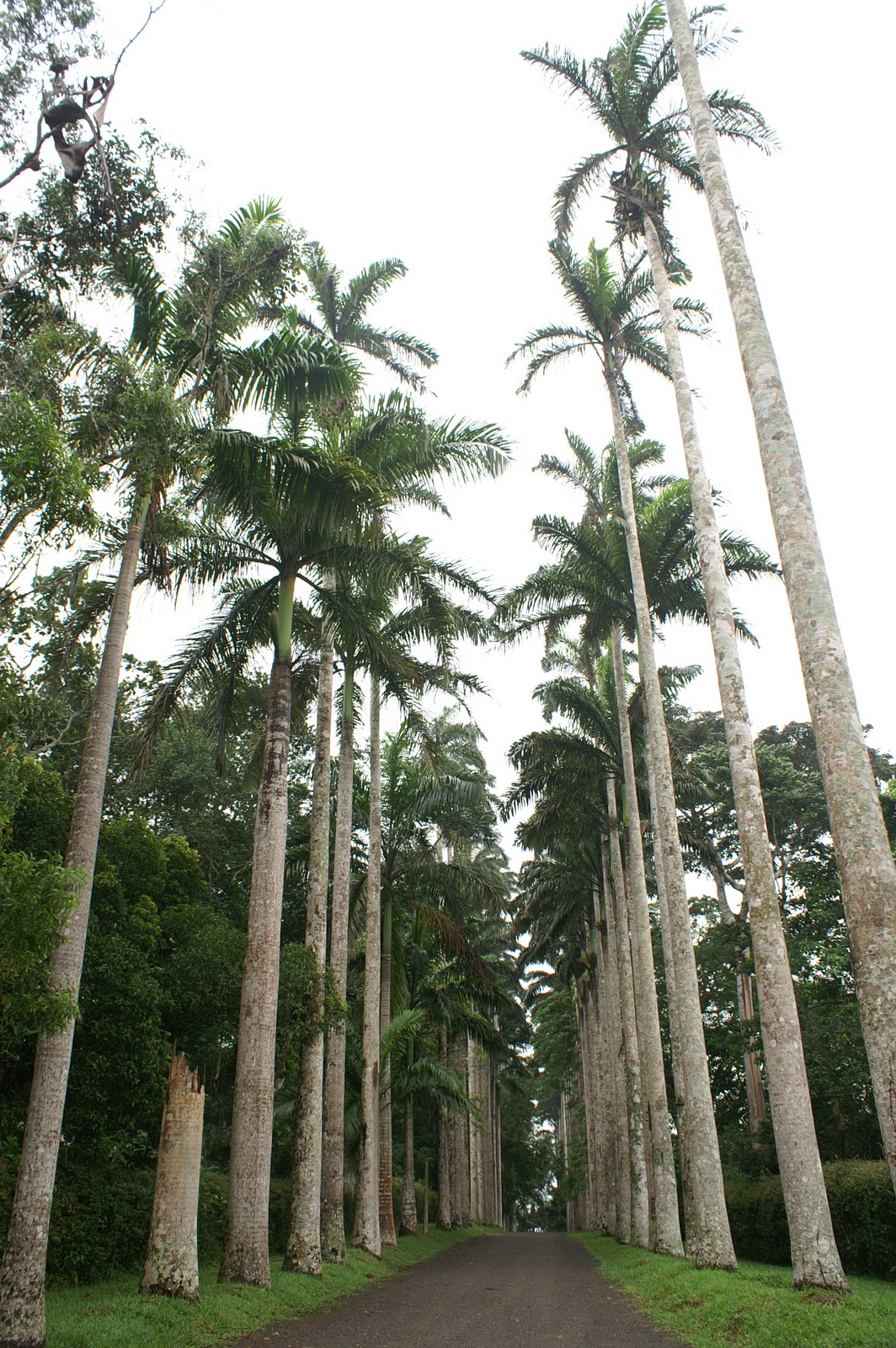
Another day of the vacation period or way lead to Aburi. Here we had no problem with finding the right car, but actually we intentionally got off a few villages after Aburi, just to get an opportunity to walk back on some of the way and get a taste of the mountains of the area. The mountains that look really great: covered with deep forest, where sometimes huge trees break the surface of the bushes. After some walking we decided to actually take a car back to Aburi – just in time, since a few minutes later it already started raining. By the time we got to Aburi, we were already pretty hungry, and also a trip like this wouldn`t be the same without a nice lunch of fufu (yes, I am getting a bit addicted to fufu, which has a pretty bad effect on my shape, though… :)), so as soon as we found a place to eat, we had our fufu – this time not with light soup, but with another soup that`s made of groundnuts and a whole lot of spices, too. It was only after this that we walked to Aburi Botanic Gardens, where walking through the paths you can see a lot of plants of a rainforest – each tagged with their names, too. When we got to the gardens, it was still pretty foggy and rainy, but I guess for getting to know the plants of a rainforest, it wasn`t such a bad timing to come now after all.   


Cape Coast Festival

Just as a pretty much last minute decision, one Saturday afternoon we set up to Cape Coast to see a live real Ghanaian concert. This was the closing event of their festival – a festival that`s based on the traditional culture of the chiefs and queen mothers and that is celebrated at different times in every town.
Well, because of the traffic jam around Accra, the concert almost started by the time we got to Cape Coast, but we could still find a nice place in the crowd to enjoy the concert.


The music wasn`t necessarily just traditional: we had all kinds of music from gospel to pop, rap and maybe also something like reggae. Just so that you can get a taste of this side of the Ghanaian culture, here are some videos of some of the artist we saw at Cape Coast:


Since the concert started at 10 p.m. and ended around 1:30 a.m., we didn`t really have a good chance to get a car back home, and also it sounded way more fun to spend the night at the ocean shore at Cape Coast. We even swam in the ocean at night, although now looking back, maybe it wasn`t the best idea, considering the chilly night that was waiting for us after this. Alright, probably it wasn`t too much colder than 15-18 degrees, but if you spend long hours in it without a sweater, you can get pretty much frozen, which makes sleeping a bit more difficult, even if you have comfortable wooden chairs to sleep on in front of a restaurant by the shore. Still, sleeping on the ocean shore was one of the best things that has happened to me here – it was already really time to do something crazy! :) Anyway, not to forget about waiting for the sunrise (even though it was a bit cloudy…) over the ocean and also Cape Coast Castle! The point is that despite of the cold and the lack of sleep, this trip was one of the best ones I had in Ghana so far.  

Sunday, 4 September 2011

A Bit About Education: The University of Legon


This Saturday we took a little trip to Legon, The University of Ghana. Legon is not too far from Accra, after you have got through the usual traffic jam (it`s crazy, I think I have already been in more traffic jam here, then ever at home) an d actually left Accra, it only takes about 20 minutes to get there in a trotro. Well, Legon is the oldest (it was founded in 1948) and the biggest university of Ghana and probably also West Africa. It`s one of the few public universities in Ghana – since most of the universities are private, which also means that they charge really high fees from the students. Education is absolutely not cheep here – already starting from nursery, the children can pay hundreds of Ghanaian cedis (1 USD ₌ 1,5 Cedis) as school fees. Since university is also very expensive, lots of people choose at first teaching at schools (for which you don`t need any degree apart from the highschool) to save up some money for university. Also, unfortunately most people see teaching as a temporary state for making a living and not too many consider it as an actual carrier.By the way, getting a job after completing university is not exactly granted here, either - in fact it all works very similarly to the European process: having relatives / friends at a certain workplace helps a lot in getting a certain job there.
Anyway, getting back to the University of Legon, it`s really-really beautiful, a lot of European universities could be envy of it, really! And it`s really huge, too! We had about two hours there which was hardly enough to walk around half of the territory, which includes the lecture halls, the dormitories (there are common dormitories and also dormitories just for men and women), a huge library, an open theater, a lot of beautiful green area, even with a fountain in it, as well as a huge botanic garden. There`s a lot of open space where the students can hang around during their freetime, although right now since we visited the place on Saturday, it wasn`t too crowded. Well, my whole impression about the place was that it`s a very friendly university that besides its nice outlook also provides great facilities for the students to spend their time together.

Wednesday, 31 August 2011

Koforidua - an Experience of Fun, Sports and Spirituality

Just after finishing the vacation classes and having our photo exhibition, we set off for our new adventure: this time we went to Koforidua, the capital of the Eastern Region of Ghana, with the youth fellowship of the church. The way took us about five and a half hours, during which just for the adventure our bus almost broke down, too – at least we waited about half an hour until they got it fixed. Then since we left late in the afternoon, it soon got dark, so by the time we were driving through some mountains I could hardly see anything. But also, it wasn`t just because of the darkness, but there was fog everywhere – they told me that it was African snow. :) By the time we got to Koforidua it was already around 11 p.m., so we soon had dinner and went to bed. The place where we slept, looked something like a youth camp, where 10-15 people shared a room and we had two places to have a bath – one for the men and one for the women, but these places didn`t have a roof or anything, just a wall around it (believe me, it`s not that hard to get used to this as it sounds for the first time :)).

The next day started pretty early in the morning: we got up around 4:30 a.m. just so that we could leave for our early morning hiking / jogging already around 5 in the morning. Unfortunately I had just slippers on instead of shoes so the jogging became a bit complicated after my slippers got spoiled on the way… Anyway, it all looked like that, that our whole group (I`m bad with estimations, but I think there was about 50-60 of us) was jogging through the town and up to a small mountain by it, early in the morning, while some people were running up and down with horns and all kinds of loud instruments to encourage the ones in the back to catch up. It was all really fun! When we got to the top, we had a pretty nice view of the towns and mountains around, even though we still had a bit of the `African snow` and also, we still had some exercises to do there, too. Coming down was already easy, only my torn slippers made a bit more complicated, that we tried to tie together with some plastic bags that we found on the way.  When we got back, after having breakfast and a bit of rest time, it was time for games (though most of the girls stayed in their rooms to get some sleep after the short night). Well, we had football, volleyball, basketball, everything, we only had a little problem with finding the right pitch to play them, but at last we found a nice football pitch just by the foot of the mountain. Here again, I became the photographer, since I just started snapping the guys playing football.


In the afternoon, we had a talk that was actually the main program for the weekend. It was held by a pastor who was a pretty big person in the region and the topic was `Generational thinkers`. Well, from the title I would have associated to something else (at least including the generations above us), but actually as I understood, the main point was that you have to plan your future today and take steps today, that will ensure your future and the coming generations as well. And all this you can achieve together with God, who will show you the path and give strength as well, to walk on it. The talk was very interesting, though to be honest I felt a bit that `being a big person` was a bit too much defined by having money and power, according to the speech… The talk was still followed by a long praying section, after which the day was pretty soon over again.
The last day again started pretty early, since we had a gathering in the morning, after which we went to a service at a local church. Most of the service was in twi (local language, there`s a lot of them, but this one is spoken by everybody), but I could still kind of follow it. Well, it seems I still have to improve my twi knowledge (I already know a very little bit, but it`s far from enough).

Anyway, after all these we set off for home. This time the bus driver seemed to take a shortcut, because on some of the way we were going through villages, among mountains, on a road that was pretty much full of holes – which actually I really enjoyed, it was just like a theme park. Also, this was I could get a sight of the villages where people were sitting in front of their adobe houses, sometimes with some animals in the house. I also saw a scene that again would have been a great picture, I just couldn`t take it: two women were sitting by a stand, selling some goods by the road. One of them had a baby on her back, while at the same time she was putting some haircream onto the other lady`s hair. I was just amazed by how somebody can do this many things at the same time, probably even without realizing that she is doing all these activities.